
Written by Michael Reavis Jr., MS, RD, CSSD
Protein is important, but in the modern world, is it becoming an obsession?
“I need more protein; protein is the most important macro,” etc. These are sentiments that I find myself constantly addressing in my professional career. It is quite common for me to have clients who come in with the sole purpose of “taking in more protein.” I think the best way to approach this question is to first describe what protein is—and what it is not.
Protein is a major macronutrient—a fancy term for something in food that we need in large quantities. It is required for muscle growth, recovery, and the remodeling of all muscle tissue, not just skeletal muscle. It plays a major role in the creation of new cells and the strength of the cells we have. Protein is also crucial for the immune system, creates the enzymes that help digest food, and even helps create hormones. These are all amazing attributes, but protein is not the only macronutrient with a plethora of functions. In fact, it is not the “most important macronutrient.” Protein is not the “new-found savior” of human nutrition that, if you spend any time on social media, you might quickly come to believe.
In my opinion, this obsession with protein goes “too far” when it starts to outcompete other macronutrients and micronutrients in terms of importance in someone’s nutritional lifestyle. In some cases, protein becomes the primary measure by which we evaluate our nutritional status, set daily nutrition “goals,” and even measure an entire day’s worth of nutrition. Meeting one’s protein goals for the day is quite important for long-term health, as shown in recent research from 2024 by Korat et al. However, there are other vital aspects of the other macronutrients that, when we focus only on protein, we may neglect. Especially since most individuals focused on protein are often weight training, missing carbohydrates—which are not only excellent high-intensity fuel sources but are also the primary source of energy for the brain—can be detrimental to training performance. Likewise, healthy dietary fats, such as omega-3s and other unsaturated fat sources (which are often not present in most protein sources), play a major role in reducing inflammation, provide a great energy source for low-intensity movement, and ensure the proper absorption of certain vitamins like vitamin D.
Focusing solely on protein can have numerous effects, one of which many individuals enjoy: weight loss. This may sound fantastic, but what is the reason behind this? Simply put, protein is not the body’s preferred fuel source—in fact, it is an inefficient one. All macronutrients provide calories and therefore can be utilized for energy, but protein’s primary role is not to serve as an energy source. Due to the complex nature of protein molecules, it takes quite a bit of work to break them down into amino acids, some of which can then be transformed, for lack of a better word, into glucose (carbs) or lipids (fats). However, the body prefers not to do this. When the body uses protein for energy, it often has to compensate by drawing energy from other stores to meet the constant energy demands of the body, which go beyond just exercise and include vital organs, breathing, and other necessary functions. These energy sources are fat stores (which results in weight loss), glycogen stores (but only for a short period), and lean muscle tissue. This last one can actually be counterproductive to an exerciser’s goals, which is why making protein the sole macronutrient in our nutrition—or having it strongly outcompete the other macronutrients—can be detrimental.
Secondly, macronutrients are not the only nutrients the body needs to acquire from external sources (food). Vitamins, minerals, fiber, and fluids all play major roles in the body’s underlying functions. This becomes especially complicated when we see that most individuals who focus on protein are not always doing so through whole food sources. Foods in nature are multifaceted, containing not only macronutrients but also a plethora of vitamins and minerals. Protein sources are often low in water-soluble vitamins like magnesium, potassium, calcium, vitamin C, B vitamins, and more—nutrients that are abundant in fruits, vegetables, legumes, and nuts/seeds. In other words, these vitamins and minerals are found primarily in non-protein sources.
We are also just beginning to understand the gut microbiome and its role in short-term and long-term human health. What we can confirm is that a diet with a balance of prebiotics and probiotics is vital for the diversity and health of the gut microbiome. This means that a diet should include fermented foods and items containing probiotics to establish healthy bacteria in the gut, as well as fiber-rich foods (prebiotics) to provide the “food” that these bacteria need. Some protein-rich foods, such as yogurt and tofu, contain probiotics, but prebiotics and fiber are largely found in fruits, vegetables, nuts/seeds, and legumes. It has also been shown in some studies that long-term high-protein diets increase the risk of intestinal disease, cardiovascular disease, and other chronic conditions. Not to mention, fiber plays a huge role in gastrointestinal health and the movement of food through the GI tract. Many individuals on high-protein diets report side effects such as bloating, increased gas, pressure in the intestines, and constipation—issues that are often resolved with consistent fiber intake.
From what I have written so far, it might seem like protein is a negative thing to consider in relation to human nutrition. This could not be further from the truth, especially when we consider the benefits of consistent protein intake for lean muscle building and maintenance, increasing strength output, and adapting to training. It’s clear that protein is beneficial. However, in the world of weightlifting and workout culture, the downside of protein arises from the pedestal on which protein is placed within these circles. Yes, protein is important, but nutrition is more than just how much protein you consume. It is about your ability to enjoy your meals, cook for yourself and loved ones, ensure you have enough energy for the present and the future, and yes, also making sure you have enough protein and amino acids to accomplish your goals related to strength and performance.
What I truly love about nutrition is the practice of making choices today that impact our future—yet the body is forgiving, and we do not know when that “future” will be. Yes, hitting your protein goals is extremely important, but there are other factors of nutrition and health that need to be considered to ensure our body is at its best, both in the immediate and eventual “tomorrow.”
Protein goals are a range. I usually recommend 1.2 grams per kilogram of body weight as a minimum for human health, assuming there are no other factors that would require limiting protein (such as kidney disease, certain metabolic conditions, etc.). For individuals who are primarily cardiovascular exercisers or athletes, I recommend 1.4–1.6 grams per kilogram of body weight, as they need to recover from exercise, but carbohydrates and fats are also highly important for this group. For mixed cardio and strength exercisers/athletes, I recommend 1.6–1.8 grams per kilogram of body weight. Finally, for strength-focused exercisers and athletes, I recommend 1.8–2.2 grams per kilogram of body weight. I recommend spreading these protein goals out throughout the day, as the body can only break down and utilize so much protein at one time.
So what does this look like for a 150-pound person?
- Regular, just walking or occasional exercise: 82 grams of protein per day (25 grams at each meal and one 5-gram snack)
- Cardiovascular exerciser/athlete: 95–108 grams of protein per day (30 grams at each meal, one 10-gram snack)
- Mixed exerciser/athlete: 108–120 grams of protein per day (30 grams at each meal, two 10-gram snacks)
- Strength exerciser/athlete: 120–150 grams of protein per day (35 grams at each meal, two 10–15 gram snacks)
I recommend whole food sources whenever possible, as they provide not only the protein but also a greater volume of food, which plays a major role in regulating our fullness/hunger hormones and cues, as well as providing additional micronutrients.
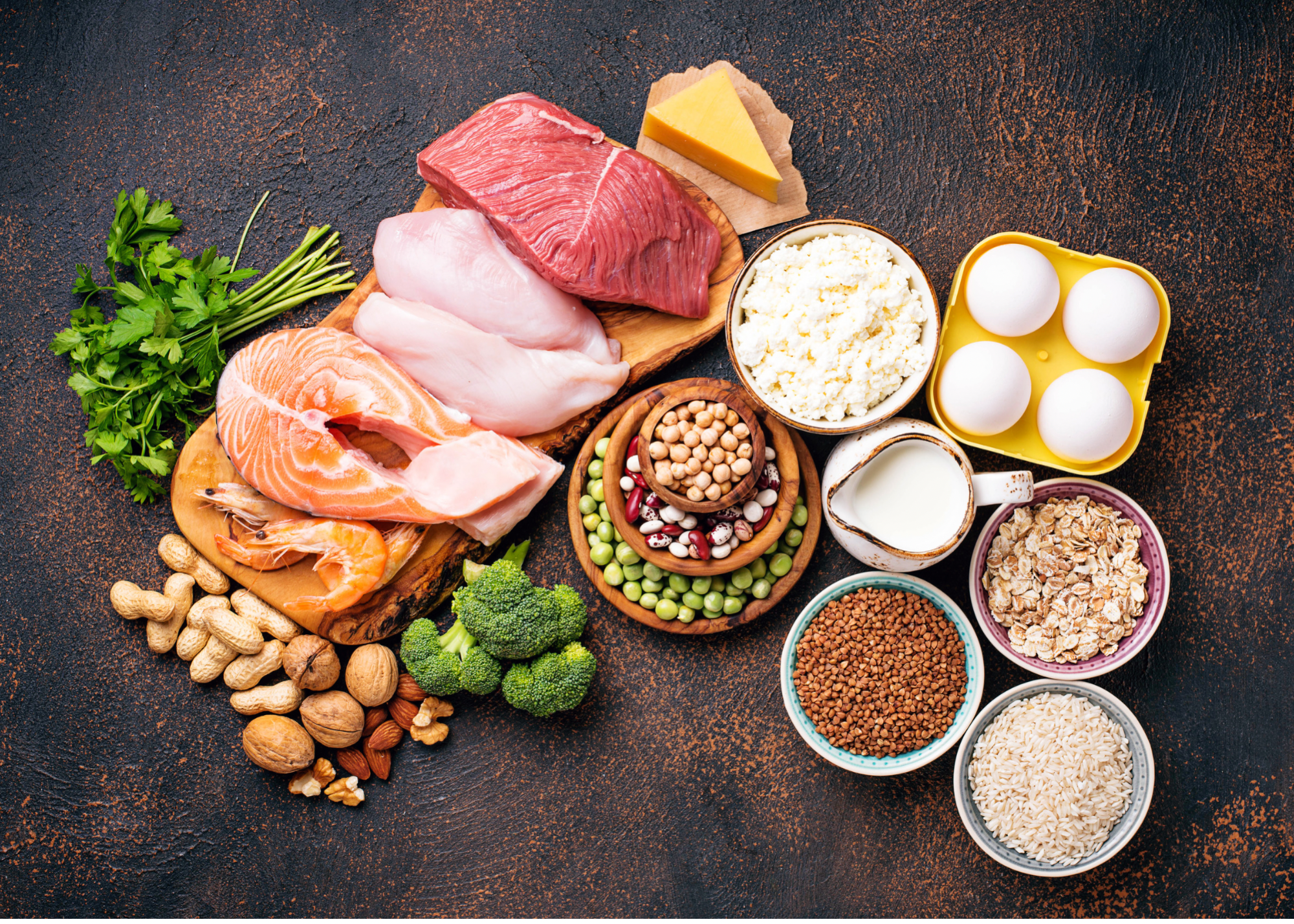
Examples of protein-rich foods include lean meats such as chicken, beef, pork, and turkey; other animal products like yogurt, milk, cheese, jerky, and eggs; and plant-based sources such as soy, tofu, nuts/seeds, tempeh, beans, and legumes. Some important numbers: each ounce of protein provides about 8 grams of protein, meaning that even for the strength-focused individual, a 4-ounce piece of protein (roughly a quarter pound) satisfies the per-meal requirement. Other interesting numbers: 1 cup of edamame has 17 grams of protein and 8 grams of fiber; 1 cup of lentils contains 18 grams of protein and 16 grams of fiber.
In conclusion, protein is a vital aspect of nutrition, but it is not the only aspect that matters, and solely focusing on it can have negative effects. When trying to meet your protein goals, spread it out over the day, prioritize food sources, and ensure there is a balance of energy around it to optimize the body’s ability to use protein for its intended purposes, such as lean muscle building and maintenance.
Leave a Reply